
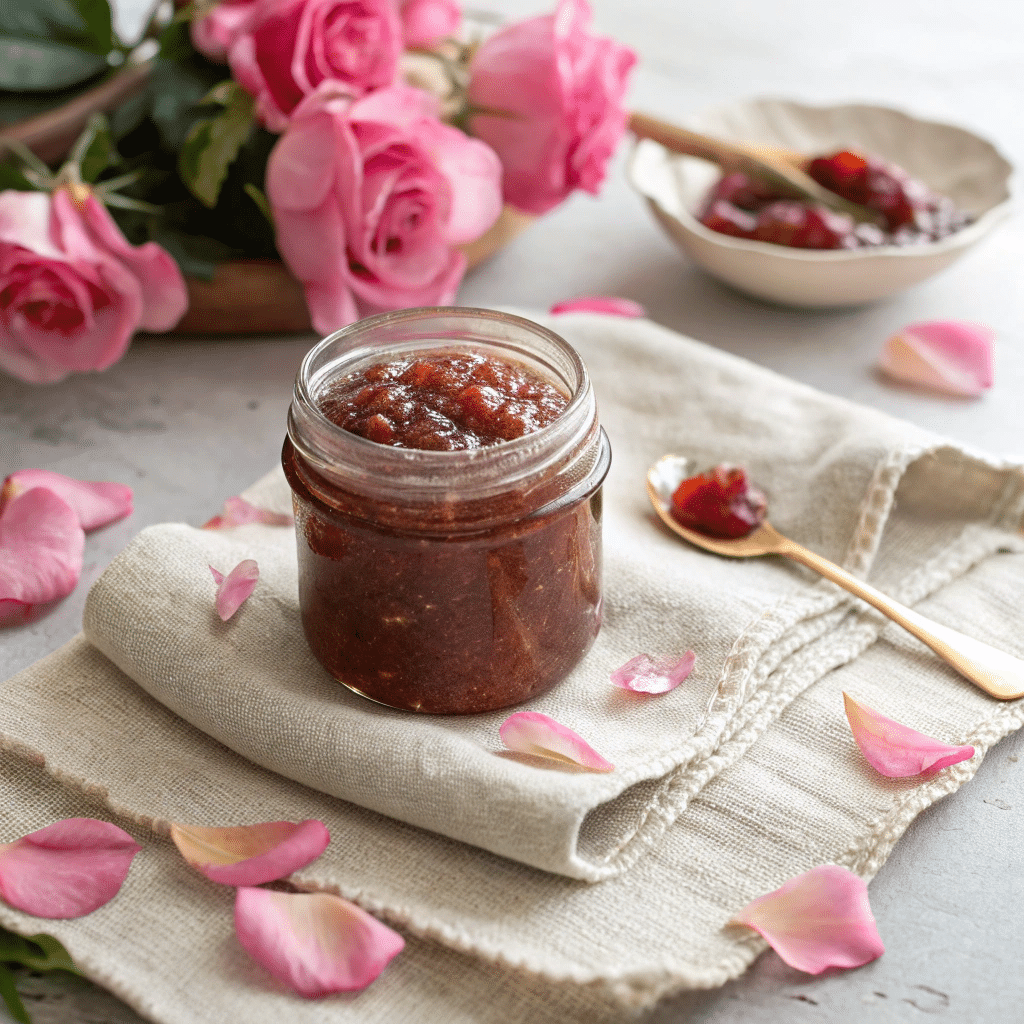
Recipe for rose petal jam is more than a culinary project—it’s a way to bottle the perfume of summer. If you’ve ever passed a blooming rose bush and wished you could taste its fragrance, this jam turns that dream into reality. In this guide, you’ll learn how to make rose petal jam at home, using simple ingredients and steps that celebrate tradition and flavor. We’ll also explore the best roses for jam, how to avoid bitterness, and answer common questions about working with rose petals.
Table of Contents
The Story Behind This Timeless Rose Petal Jam Recipe
Where It All Began
Recipe for rose petal jam always brings me back to my grandmother’s garden. I was about eight, barefoot on warm stone paths, watching her pluck deep-pink Damask petals one by one. She never rushed. Every rose she picked had a purpose. In her kitchen, the petals met sugar and lemon in a copper pot, filling the house with a perfume that lingered for hours. That was my first lesson in floral cooking—not from books, but from memory.
Years later, when I began making my own rose jam, I followed her example. I didn’t start with chef training. I started with feelings—calm, comfort, connection. That’s what this recipe is built on. It’s been tested in my kitchen, adjusted with love, and simplified so you can enjoy the same experience—whether it’s your first time or your fiftieth.
Why Homemade Rose Jam Feels So Special
Making rose petal jam at home feels like preserving beauty in a jar. It’s not just about the flavor—though that’s unforgettable—it’s about the process. You’re handling something delicate, almost ethereal, and transforming it into something rich and lasting.
Unlike store-bought floral jams, this one uses real petals, not artificial flavor. It’s fresh, fragrant, and gentle on the palate. Plus, once you master this recipe, you can gift it or serve it with toast, cheese, or even desserts. The possibilities are endless.
Choosing the Right Roses for Your Rose Petal Jam Recipe
The Best Rose Varieties for Jam
To create the most flavorful recipe for rose petal jam, the roses you choose truly matter. Not all roses are created equal when it comes to taste and aroma. For this recipe, always go with organic, untreated blooms—ideally ones grown specifically for culinary use. The best roses for this kind of jam are Damask roses. Their strong fragrance and rich oil content are ideal for extracting deep floral flavor.
Rosa rugosa and wild heritage roses are also excellent for any recipe for rose petal jam, offering natural color and perfume. Avoid florist roses. Even if they look stunning, they’re often sprayed with chemicals that aren’t food-safe. If you’re unsure whether your roses are edible, it’s better to skip them than risk it.
For the most vibrant results, gather your petals early in the morning when their oils are most potent. Gently remove the white base of each petal, as this part can create a bitter aftertaste that could ruin your recipe for rose petal jam.
How Fresh Petals Impact Taste and Color
Fresh petals are essential to achieving a truly standout recipe for rose petal jam. Freshly picked, fragrant petals produce a jam that’s richly colored and full of delicate floral notes. Old or wilted petals can lead to a muddy color and muted flavor—far from what you want in a memorable recipe for rose petal jam.
A splash of lemon juice enhances the brightness, both visually and in taste. It naturally amplifies the petal color and balances the sugar. If you’re aiming for a jam that impresses both visually and on the palate, freshness isn’t just a preference—it’s the foundation of a successful recipe for rose petal jam.
Print
Recipe for Rose Petal Jam: A Fragrant Homemade Delight
- Total Time: 40 minutes
- Yield: 1½ cups 1x
- Diet: Vegetarian
Description
This rose petal jam captures the delicate aroma and beauty of organic roses in a sweet, lemony preserve. Perfect for spreading, gifting, or pairing with desserts.
Ingredients
2 cups organic rose petals (washed and trimmed)
1½ cups sugar
1½ cups water
2 tablespoons fresh lemon juice
Instructions
1. Simmer water, sugar, and lemon juice until the sugar dissolves.
2. Add trimmed rose petals and stir gently.
3. Simmer for 25–30 minutes until petals are translucent.
4. Allow jam to cool slightly before pouring into sterilized jars.
5. Seal and refrigerate or process in a water bath for long-term storage.
Notes
Use only organic, pesticide-free petals.
For deeper color, add a few drops of beet juice.
Great as a glaze, toast spread, or in desserts.
- Prep Time: 10 minutes
- Cook Time: 30 minutes
- Category: Jam & Preserves
- Method: Stovetop
- Cuisine: Homemade
Nutrition
- Serving Size: 1 tbsp
- Calories: 60
- Sugar: 13g
- Sodium: 0mg
- Fat: 0g
- Saturated Fat: 0g
- Unsaturated Fat: 0g
- Trans Fat: 0g
- Carbohydrates: 15g
- Fiber: 0g
- Protein: 0g
- Cholesterol: 0mg
Keywords: recipe for rose petal jam, rose jam, floral preserve
Step-by-Step Guide to Making the Perfect Rose Petal Jam
Simple Ingredients, Big Flavor
One of the beautiful things about this recipe for rose petal jam is how few ingredients it actually takes. You don’t need pectin or complicated steps—just petals, sugar, water, lemon juice, and time. That’s it. The magic happens through slow simmering and the natural thickening power of sugar and citrus.
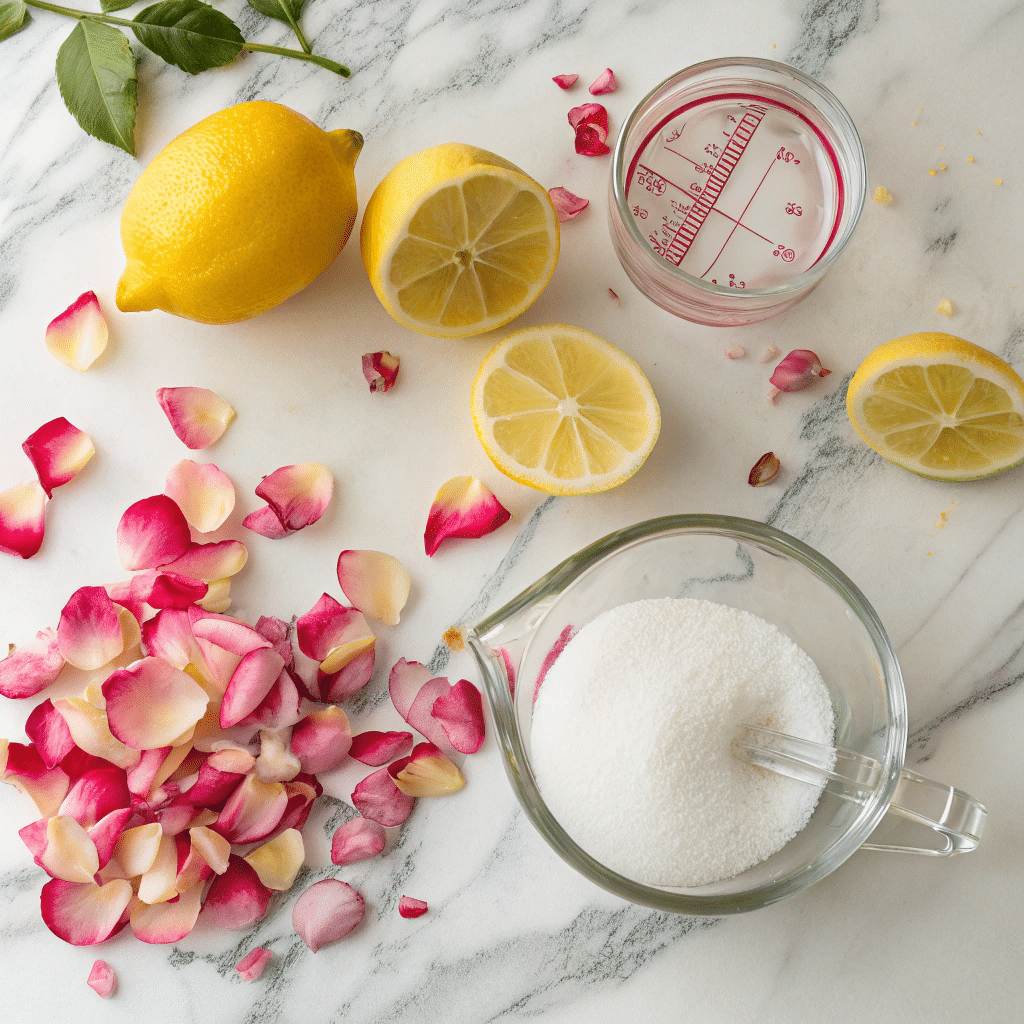
Here’s what you’ll need:
- 2 cups organic rose petals (washed and trimmed)
- 1 ½ cups sugar
- 1 ½ cups water
- 2 tablespoons fresh lemon juice
This basic ratio can be doubled or halved depending on how much you want to make. It’s best to use a heavy-bottom saucepan to prevent scorching and bring out the deepest color. And always use fresh lemon—bottled juice just doesn’t deliver the same brightness that makes a recipe for rose petal jam pop.
Cooking Technique That Preserves Aroma
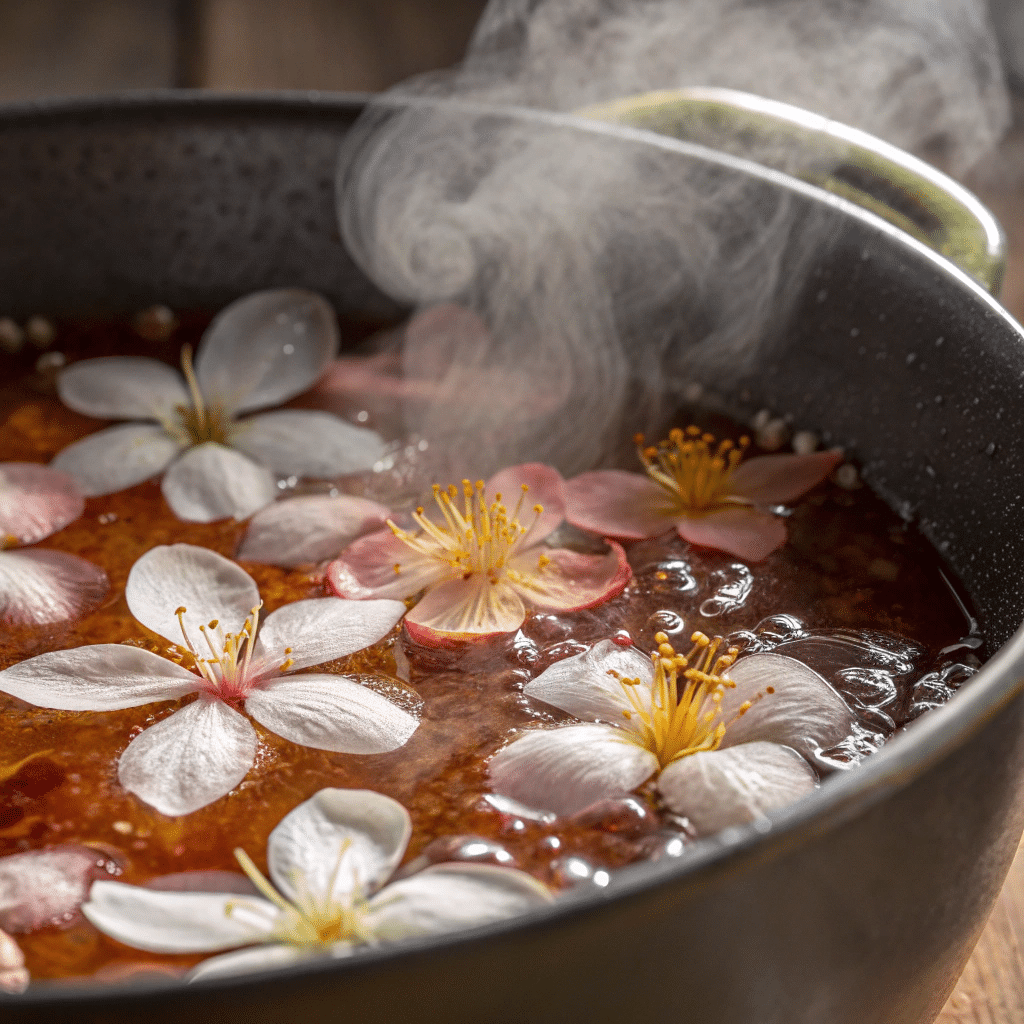
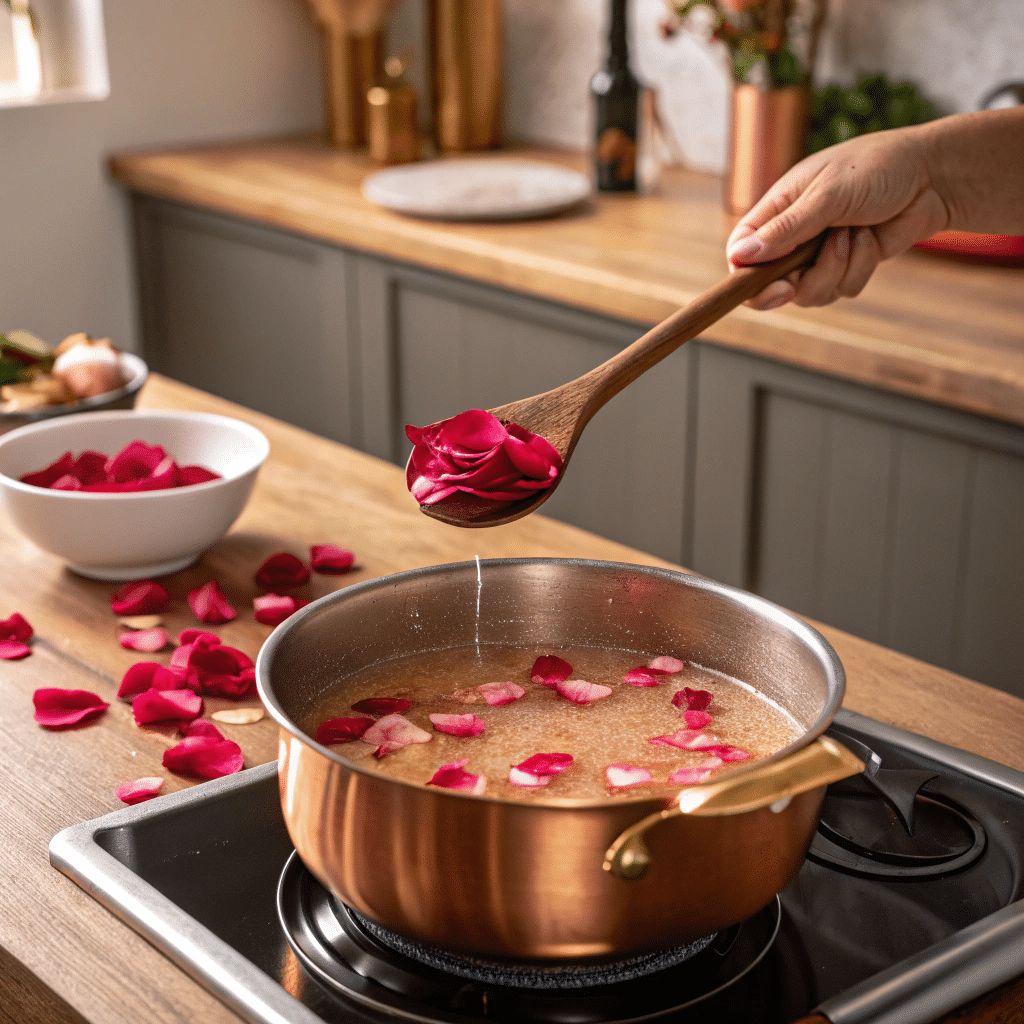
Start by simmering the water, sugar, and lemon juice until the sugar dissolves. Then add the petals. At first, they’ll wilt and look pale—that’s normal. As the mixture simmers, its color darkens and it slowly begins to thicken and change. Stir occasionally and watch as the syrup thickens slightly. After about 25–30 minutes, the petals will be translucent and the liquid glossy.
For a thicker jam, you can simmer a bit longer, but don’t overdo it. The goal is to preserve the floral fragrance without turning the petals mushy or caramelizing the sugar. The secret to a standout recipe for rose petal jam is knowing when to stop—right before it gets too thick. The jam will continue to set slightly as it cools.
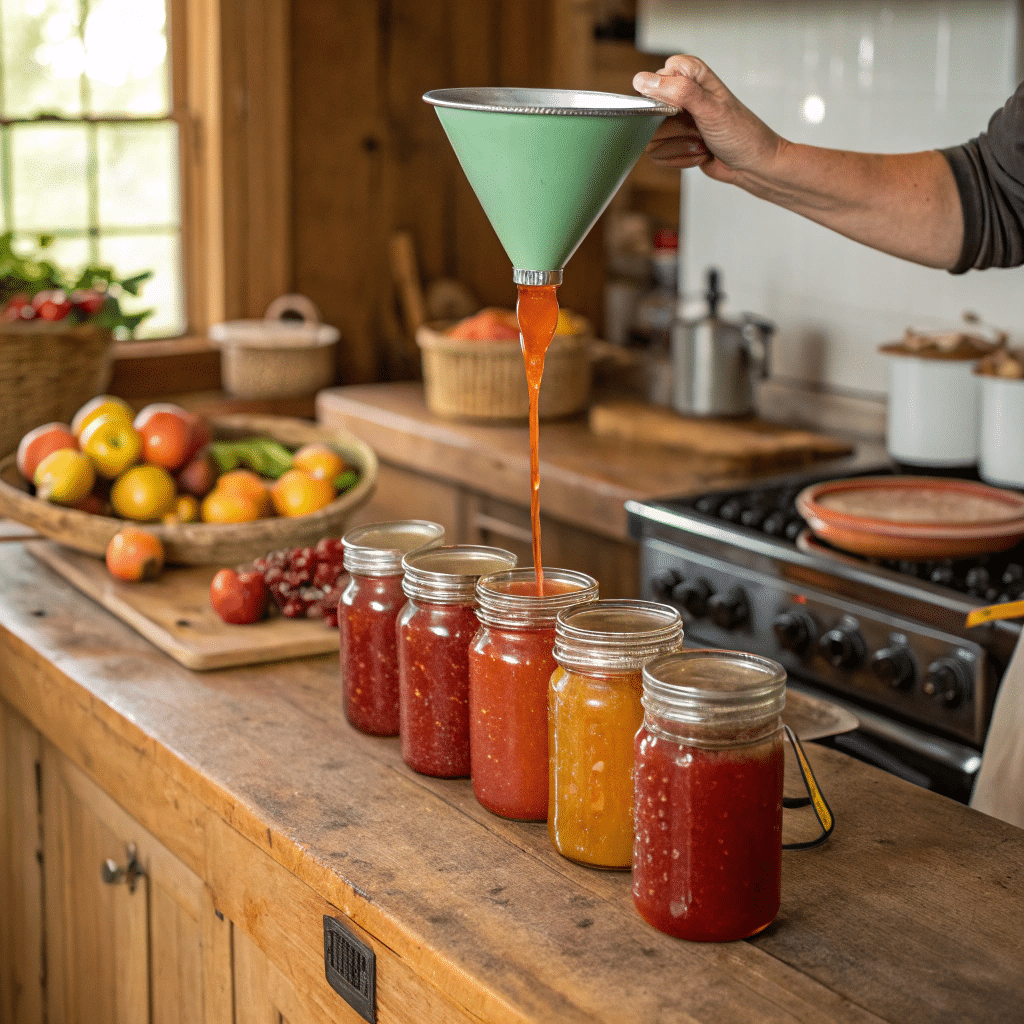
Once cooled, pour it into sterilized jars, seal them tight, and store in the fridge. That’s all it takes to master a timeless recipe for rose petal jam in your own kitchen.
Storing, Serving & Enjoying Your Rose Petal Jam
How to Store It for Long-Lasting Freshness
Once you’ve completed your recipe for rose petal jam, it’s important to store it correctly so all that delicate flavor doesn’t fade. Always use sterilized glass jars with airtight lids. Once you’ve poured the warm jam into jars, seal them right away. Allow them to cool at room temperature before placing them in the fridge.
If you plan to use the jam within a few weeks, simple refrigeration works just fine. For longer storage, you can process the filled jars using a water bath canning method, which can keep them shelf-stable for up to a year. Be sure to label each jar with the date you made your recipe for rose petal jam, so you always know how fresh it is.
Avoid plastic containers, as they can absorb or alter the floral aroma. Use glass jars to preserve the jam’s flavor and freshness.
Creative Ways to Serve Rose Petal Jam
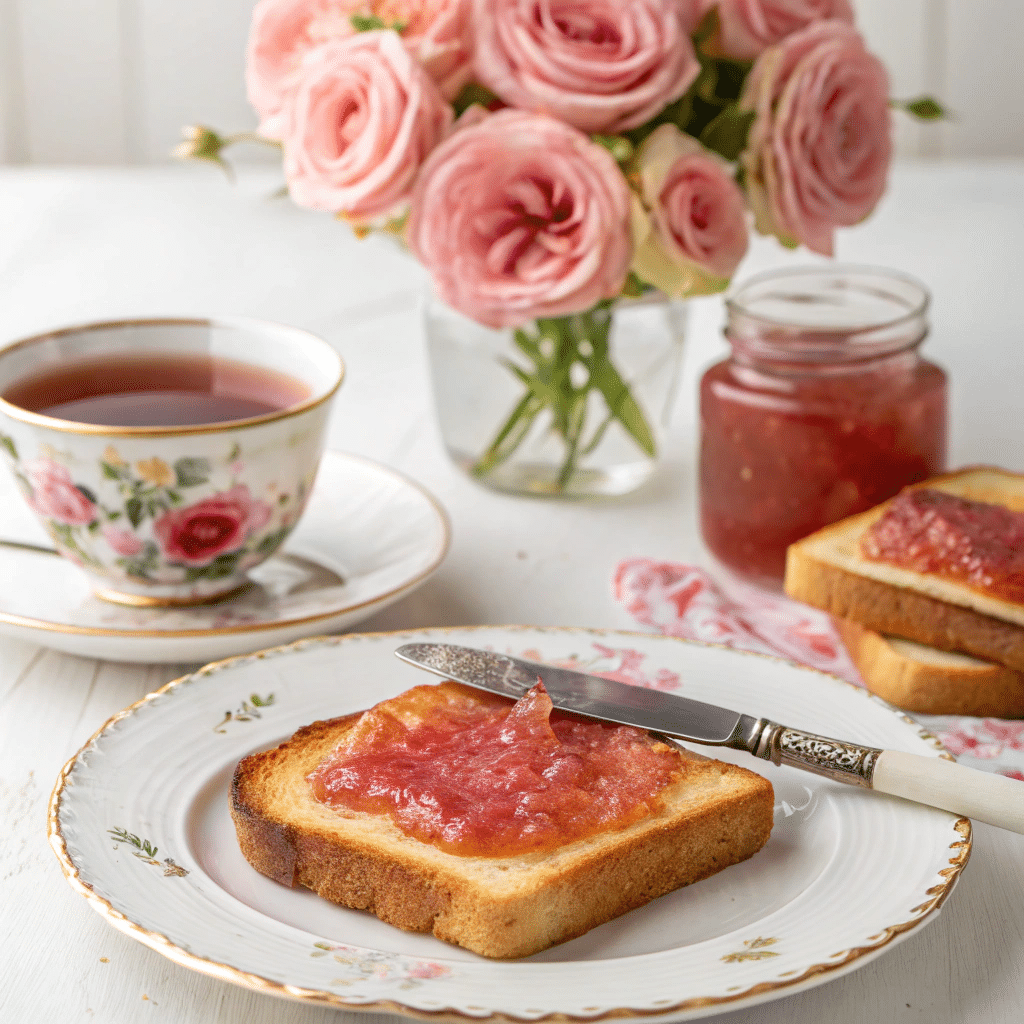
The beauty of any good recipe for rose petal jam is in its versatility. It’s not just for spreading on toast—though it’s heavenly on warm sourdough with a bit of butter. You can also drizzle it over pancakes or waffles, stir it into yogurt, or spoon it alongside soft cheeses like Brie or ricotta for a lovely appetizer.
Feeling adventurous? Use it as a glaze for cakes or brush it on shortbread cookies. You can even add a teaspoon to a glass of hot tea for a subtle floral twist. The elegance of this recipe for rose petal jam lies in how easily it elevates simple dishes into something memorable.
Whether you serve it at brunch, give it as a handmade gift, or enjoy it on a quiet morning with coffee, this jam adds a touch of beauty to everyday life.
Conclusion
A homemade recipe for rose petal jam brings together tradition, fragrance, and flavor in the most beautiful way. From carefully choosing your roses to watching the petals turn into sweet preserves, every step is satisfying. Whether you enjoy it on toast, drizzle it on desserts, or gift it to someone special, this jam brings elegance to everyday life. It’s more than a preserve—it’s a memory you can taste.
For More recipes Follow me in Facebook and Pinterest
Frequently Asked Questions
How to make jam with rose petals?
Start by selecting clean, organic rose petals—about 2 cups. Simmer them in a sugar-water-lemon mixture until they turn translucent and the syrup thickens. This classic recipe for rose petal jam uses just a few ingredients and brings out the natural aroma of the petals. Once cooked, pour the mixture into sterilized jars and refrigerate.
What are the best roses for rose petal jam?
Damask roses are ideal because of their intense fragrance and deep color. Other excellent choices include Rosa rugosa and heirloom garden roses. Always use roses that are organically grown and pesticide-free. For any recipe for rose petal jam, the more fragrant the rose, the better the flavor.
Why is my rose jam bitter?
Bitterness usually comes from the white base of each petal. Always trim it off before cooking. Also, overcooking or using roses that are past their prime can create bitterness. To avoid this, use fresh, early-morning-picked petals and follow the simmering time carefully in your recipe for rose petal jam.
Do rose petals contain pectin?
No, rose petals do not naturally contain pectin. That’s why lemon juice is essential in a traditional recipe for rose petal jam. It helps thicken the mixture and enhances the jam’s color and shelf life.