
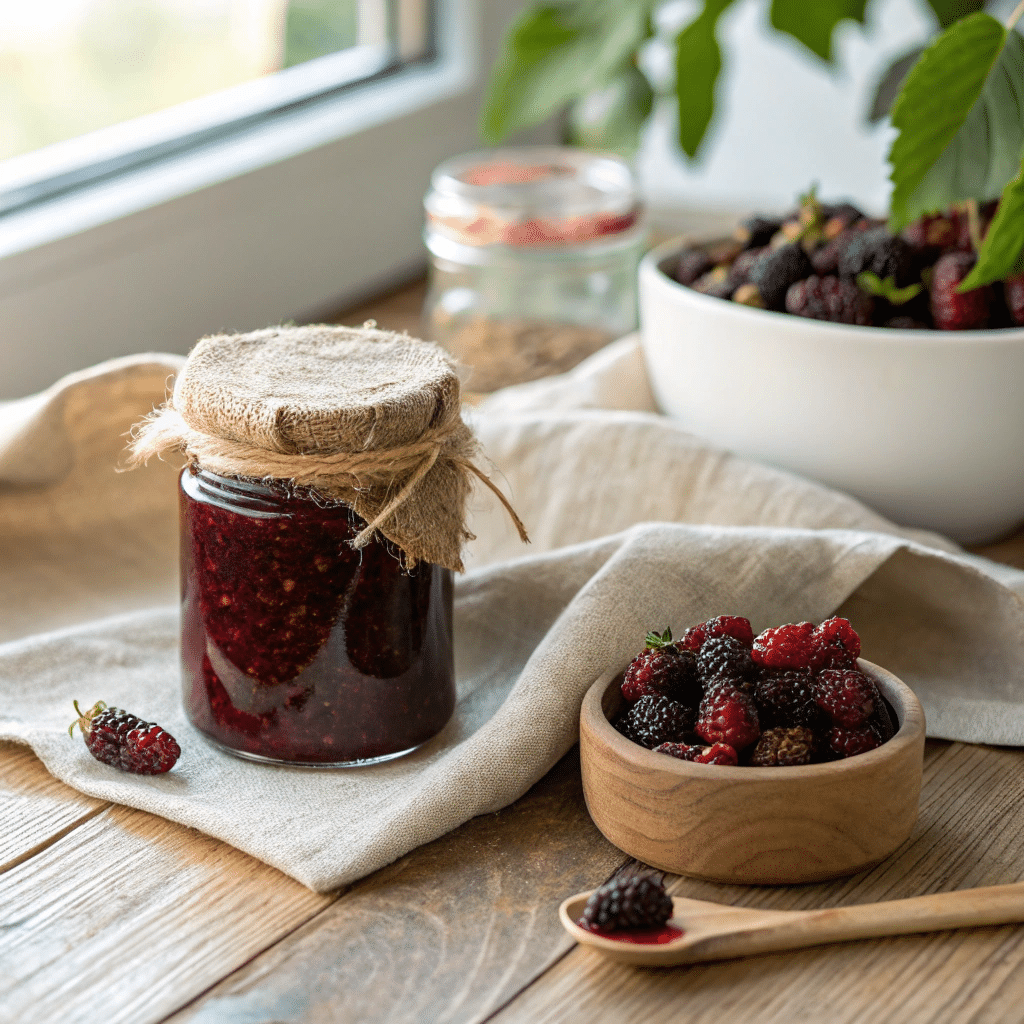
Recipe for mulberry jam lovers, this one’s for you. Whether your backyard tree is bursting with ripe mulberries or you’ve scored a market haul, this jam captures the fruit’s sweet-tart magic perfectly. In this guide, I’ll walk you through a tested, delicious method for homemade mulberry jam—no fancy equipment, no stress. From childhood memories in my grandma’s garden to batches made on rainy afternoons, I’ll also share personal tips, troubleshooting, and tricks to preserve that fleeting flavor of summer. If you’ve ever wondered how to make mulberry jam that actually sets and tastes amazing, you’re in the right place.
Table of Contents
My Family’s Favorite Recipe for Mulberry Jam
From berry-stained fingers to morning toast
I still remember standing barefoot on a wooden crate, reaching up to pick mulberries with my grandmother. We’d return with bowls full—some slightly crushed from over-eager picking. Those moments weren’t about perfection. They were about joy. That’s the same feeling I bring to every batch of jam I make. A good recipe for mulberry jam doesn’t need to be complicated. It just needs to be real—rich in flavor, easy to follow, and rooted in tradition.
Homemade mulberry jam has this earthy sweetness that most store-bought jams miss. And unlike strawberries or raspberries, mulberries offer a mild, almost floral depth that pairs beautifully with lemon and sugar. You don’t need commercial pectin, either—mulberries contain just enough natural pectin to gel with a little help from lemon juice and heat. The first time I made it myself, I was surprised how quickly it all came together—under an hour from fruit to jar.
Tested, simple, and unforgettable
My go-to mulberry jam recipe uses just four ingredients: fresh mulberries, sugar, lemon juice, and a touch of water. The key is simmering slowly and watching for the wrinkle test (I’ll walk you through it). You don’t need to remove every single stem—they’re tender enough to cook down—but a quick sort helps.
This isn’t just jam; it’s a spoonful of memory. And if you’re like me, once you make one jar, you’ll be hooked. It’s delightful on toast, swirled into yogurt, or layered in cakes.
Print
H1: Recipe for Mulberry Jam That Tastes Like Summer in a Jar
- Total Time: 45 minutes
- Yield: 3 small jars 1x
- Diet: Vegetarian
Description
A simple, no-pectin recipe for mulberry jam that captures the sweet, tangy taste of summer with just a few ingredients.
Ingredients
4 cups fresh mulberries
2½ cups granulated sugar
2 tablespoons lemon juice
¼ cup water
Instructions
1. Rinse and gently sort mulberries, removing leaves and large stems.
2. Combine mulberries, sugar, lemon juice, and water in a saucepan.
3. Let the mixture sit for 15 minutes.
4. Bring to a boil, then reduce heat to simmer.
5. Simmer for 25–35 minutes, stirring frequently.
6. Use the wrinkle test on a cold plate to check if jam is set.
7. Pour into sterilized jars and seal.
Notes
You can freeze this jam in small containers or can it using the water bath method for longer shelf life.
Add vanilla or cinnamon for a twist.
- Prep Time: 10 minutes
- Cook Time: 35 minutes
- Category: Jam & Preserves
- Method: Stovetop
- Cuisine: American
Nutrition
- Serving Size: 1 tablespoon
- Calories: 50
- Sugar: 11g
- Sodium: 0mg
- Fat: 0g
- Saturated Fat: 0g
- Unsaturated Fat: 0g
- Trans Fat: 0g
- Carbohydrates: 13g
- Fiber: 1g
- Protein: 0g
- Cholesterol: 0mg
Keywords: recipe for mulberry jam, no pectin jam, homemade jam
How to Make the Best Recipe for Mulberry Jam
Simple ingredients, stunning results
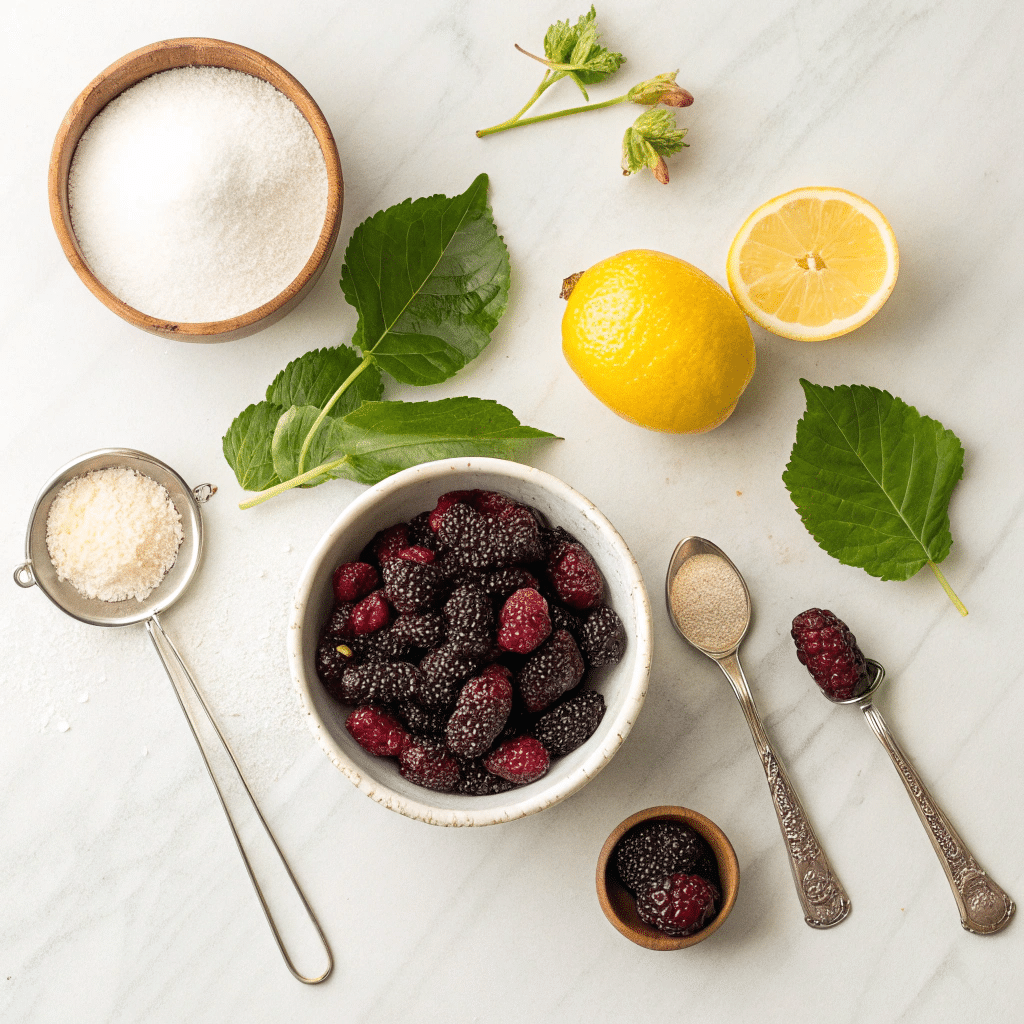
When creating a perfect recipe for mulberry jam, you don’t need exotic ingredients. In fact, the simpler, the better. What you need is fruit at its peak and a clear method that brings out the mulberry’s soft, floral sweetness without overpowering it. Here’s what I use every time:
- 4 cups fresh mulberries (gently rinsed)
- 2½ cups granulated sugar
- 2 tablespoons lemon juice
- ¼ cup water
That’s it. This recipe for mulberry jam doesn’t require store-bought pectin, which means you get a purer, fruitier finish and a lovely homemade texture that spreads like a dream.
Step-by-step guide to jam perfection
- Prep the berries: Pick through your mulberries to remove any leaves or thick stems. You don’t need to obsess over every stem—most soften during cooking.
- Combine and heat: In a wide saucepan, combine the mulberries, sugar, lemon juice, and water. Let the mixture sit for 15 minutes. This helps the berries release their juices.
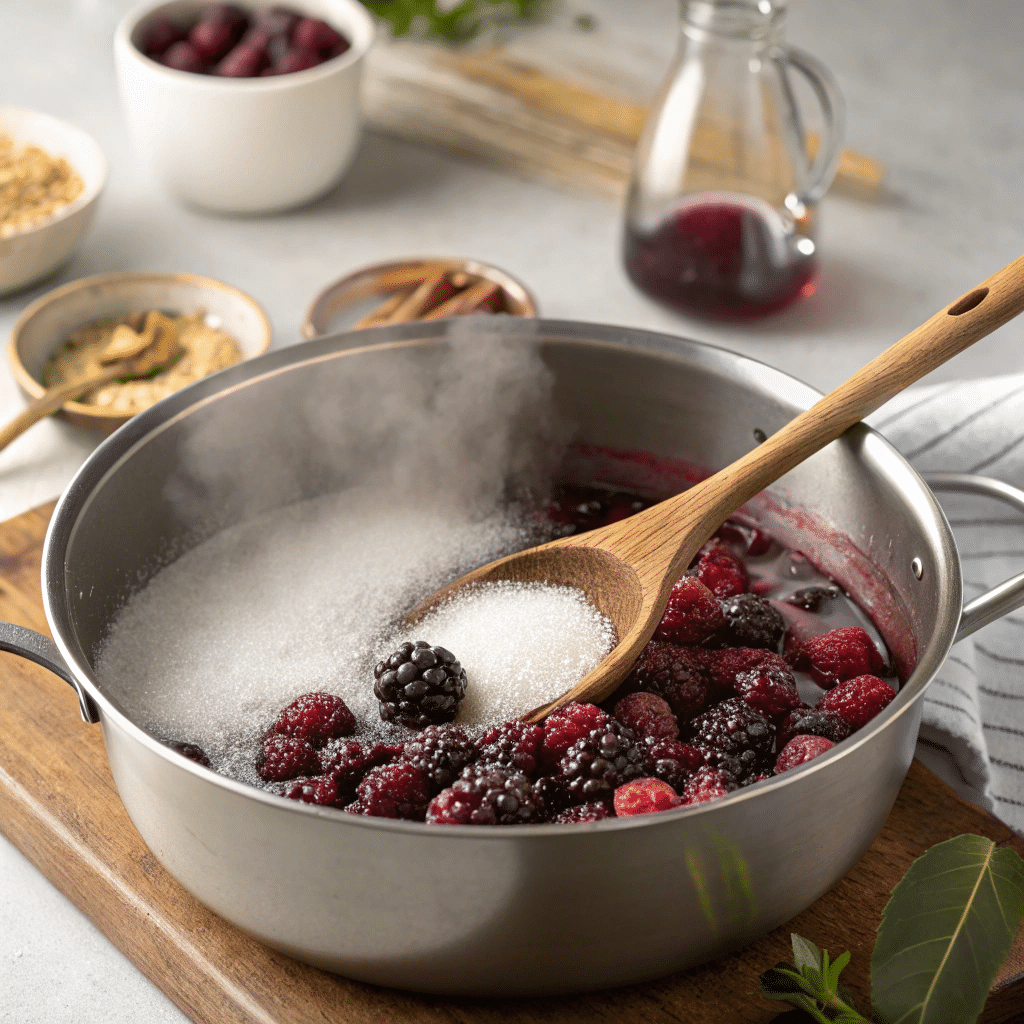
- Simmer and stir: Heat the mixture over medium heat, bringing it to a gentle boil while stirring regularly. Stir often to prevent sticking. Then reduce the heat and simmer for about 25–35 minutes. Use a wooden spoon to gently mash the fruit as it softens.
- Check the set: Place a small spoonful of jam on a chilled plate to see if it thickens.If it wrinkles when pushed, it’s ready. If it’s still runny, let it simmer for another 5 minutes and test again.
This recipe for mulberry jam works beautifully in small batches, allowing you to control the set and flavor. The lemon juice isn’t just for tang—it also activates the natural pectin in the berries, ensuring the jam firms up just right.
The next time you’re looking for a recipe for mulberry jam that’s both traditional and foolproof, bookmark this one. It’s more than just a preserve—it’s a tradition passed on in every jar.
Creative Ways to Use and Store Mulberry Jam
How to store your mulberry jam safely
Once you’ve made your batch of homemade goodness, storing it properly is key. The best part about this recipe for mulberry jam is that it holds up beautifully for months with basic canning steps. If you’re not into water-bath canning, no problem—just let the jam cool and keep it in sterilized glass jars in the fridge. It can be stored in the refrigerator and will stay fresh for up to 4 weeks. For longer storage, freeze the jam in freezer-safe containers, leaving a little space at the top for expansion.
If you’re familiar with canning, follow the standard water bath process. Pour the hot jam into sterilized jars, seal tightly, and process in boiling water for 10 minutes. Let cool completely. This gives you shelf-stable jam that lasts up to a year.
Delicious and surprising ways to enjoy mulberry jam
Sure, it’s amazing on toast. But the beauty of a good recipe for mulberry jam is how versatile it is. Try it spooned over vanilla ice cream or mixed into oatmeal. It makes a stunning filling for thumbprint cookies, layered cakes, and even as a swirl in homemade cheesecake. One of my favorite ways to use it is as a glaze for roasted chicken—yes, really! Its sweet-tart flavor caramelizes beautifully when baked.
This mulberry jam recipe also pairs perfectly with cheese. Spread it over brie, goat cheese, or sharp cheddar for an elegant appetizer that never fails to impress. Need a last-minute dessert? Layer mulberry jam between sheets of puff pastry with whipped cream. Instant magic.
Once you taste it, you’ll understand why this is my go-to recipe for mulberry jam year after year. Whether you’re gifting it, storing it, or spreading it on everything you eat, it’s a small joy that lasts well beyond mulberry season.

Troubleshooting & Tips for the Perfect Recipe for Mulberry Jam
Avoid these common jam mistakes
Even a tried-and-true recipe for mulberry jam can go off track without a few helpful pointers. The number one issue I hear about is jam that won’t set. If your mulberries were very ripe, they may have less natural pectin. The fix? Add extra lemon juice or simmer the jam a little longer until it thickens. Another problem: overcooking. If the jam tastes too dark or thickens into a gummy texture, it likely boiled too long. Stick to medium heat and test often.
Worried about foam? It’s harmless, just skim it off the top while simmering for a clearer finish. And if your jam crystallizes after cooling, it’s usually due to stirring sugar into cold fruit or adding sugar too quickly. Always let the sugar dissolve slowly into warmed berries first.
Expert tips for flawless flavor and texture
Want deeper flavor? Roast your mulberries briefly before jamming. It intensifies their sweetness and gives this recipe for mulberry jam an almost wine-like richness. Prefer a smoother texture? Strain the berries halfway through simmering for a seedless version—great for fillings.
If you’re new to canning, a good trick is to chill a few spoons in the freezer. Use one to do the wrinkle test without waiting long. No candy thermometer needed!
Lastly, label your jars with the date and batch type. Even the best recipe for mulberry jam tastes better when you know how old it is. It’s also helpful when experimenting with variations like adding vanilla, cinnamon, or a splash of balsamic vinegar.
This jam isn’t just about flavor. It’s about confidence, curiosity, and tradition—everything I believe food should bring into our kitchens.
Conclusion
A good recipe for mulberry jam is more than just a list of steps—it’s a tradition, a memory, and a gift in a jar. Whether you spread it on warm toast, swirl it into cake batter, or gift it with handwritten labels, this jam brings flavor and heart to your kitchen.
From my childhood memories to your breakfast table, I hope this jam becomes one of your favorites too. Cooking should feel free—free to try, to taste, to remember. That’s exactly what fre Recipes is about.
Welcome to the table. I’m so glad you’re here.
For More recipes Follow me in Facebook and Pinterest
FAQs About Recipe for Mulberry Jam
How to make mulberry jam?
To make mulberry jam, combine 4 cups of fresh mulberries, 2½ cups of sugar, 2 tablespoons of lemon juice, and ¼ cup of water. Simmer the mixture on medium heat for about 30 minutes until thickened, stirring regularly. Use the wrinkle test on a chilled plate to check if it’s set. Once done, pour into sterilized jars and seal.
Does mulberry jam need pectin?
No, mulberry jam doesn’t require added pectin. Mulberries have enough natural pectin, especially when paired with lemon juice, to gel properly when simmered over time. This makes a recipe for mulberry jam more natural and preserves the true fruit flavor.
Do you need to remove mulberry stems for jam?
You don’t need to remove every tiny mulberry stem for jam. The green stems are soft and will break down during cooking. However, if stems are large or woody, it’s best to snip them off for a smoother texture in the finished jam.
Do mulberries have much pectin?
Mulberries have a moderate amount of pectin—not as much as apples or citrus, but enough to set jam with the help of lemon juice. That’s why this recipe for mulberry jam works without commercial pectin and still gives you a beautiful, spreadable consistency.