
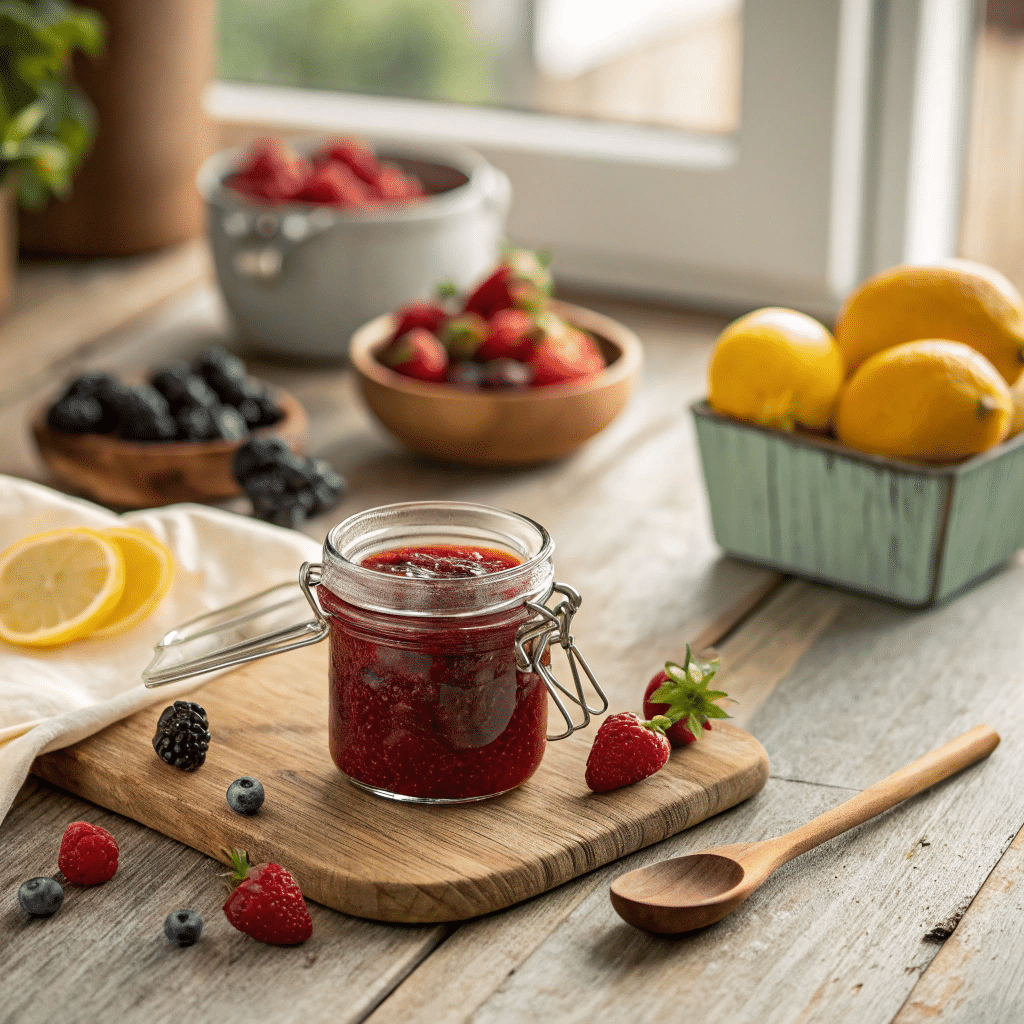
Low sugar jam recipe lovers—this one’s for you. Whether you’re reducing sugar for health, flavor, or personal preference, this guide walks you through making jam that’s bright, fresh, and naturally sweet without all the excess. We’ll break down how to cut sugar safely, which fruits work best, and what alternatives actually taste good. This isn’t about missing out—it’s about unlocking pure fruit flavor in every spoonful. Perfect for spreading on toast, swirling into yogurt, or gifting in mason jars, this recipe brings old-fashioned comfort with a modern twist. Let’s get started with a story from my own kitchen.
Table of Contents
The Story Behind This Low Sugar Jam Recipe
Where it all began: a summer of sweetness
Low sugar jam recipe ideas didn’t come naturally to me—I was raised on the classic kind. The ones made with almost more sugar than fruit. But everything changed on one hot, sticky summer afternoon. I had just come home from the farmer’s market, my canvas bag bursting with strawberries, blueberries, and peaches. The scent alone pulled me into my kitchen.
Back then, I was chasing memories of my grandmother’s preserves—her pantry always lined with jars that sparkled like ruby gems. But now, I wanted to make something I could enjoy more often and feel good about. That’s when I began experimenting with a low sugar jam recipe. At first, I worried the flavor would suffer. But to my surprise, cutting the sugar actually let the fruit shine.
Why I never went back to high-sugar
Once I realized how little sugar was really needed to create a thick, luscious spread, I was hooked. Not only did it taste better, but it also felt lighter and fresher. I started gifting jars to friends, and they couldn’t believe it was low sugar. That’s when I knew: this low sugar jam recipe wasn’t just a healthier option—it was a better one. It’s simple, satisfying, and now a staple in my kitchen. Stick around, because in the next section, we’ll talk about ingredients and how to adjust for different fruits.
Print
Low Sugar Jam Recipe That Tastes Like Summer in a Jar
- Total Time: 25 minutes
- Yield: 4 half-pint jars 1x
Description
This low sugar jam recipe is the perfect way to preserve fresh fruit without relying on heavy sugar. Sweetened naturally and made with simple ingredients, it’s a healthy, homemade alternative to traditional jams.
Ingredients
4 cups ripe fresh fruit (e.g., strawberries, blueberries, or peaches)
1/4 cup honey or maple syrup (or to taste)
1 tbsp lemon juice
2 tsp low-sugar pectin (such as Pomona’s)
1/2 tsp calcium water (if required by pectin used)
Instructions
1. Sterilize jars and prepare lids; keep them warm until ready.
2. Wash and chop fruit, then place in a large saucepan.
3. Add lemon juice and begin heating over medium, stirring often.
4. Mix pectin with sweetener and stir into fruit once it begins to boil.
5. Bring mixture to a full rolling boil for 10–15 minutes, stirring constantly.
6. Test for desired thickness on a chilled plate.
7. Ladle hot jam into jars, leaving 1/4″ headspace.
8. Wipe rims, apply lids, and process jars in a boiling water bath for 10 minutes.
9. Cool for 12–24 hours. Check seals before storing.
Notes
Use the ripest fruit available for best flavor.
Adjust sweetener to taste based on fruit type.
Store sealed jars in a cool, dark place for up to 1 year.
Refrigerate after opening and use within 2–3 weeks.
- Prep Time: 10 minutes
- Cook Time: 15 minutes
- Category: Jam & Preserves
- Method: Canning
- Cuisine: American
Nutrition
- Serving Size: 1 tablespoon
- Calories: 25
- Sugar: 3g
- Sodium: 0mg
- Fat: 0g
- Saturated Fat: 0g
- Unsaturated Fat: 0g
- Trans Fat: 0g
- Carbohydrates: 6g
- Fiber: 0.5g
- Protein: 0g
- Cholesterol: 0mg
Keywords: low sugar jam, homemade jam, healthy jam, canning recipe, sugar-free jam
Essential Ingredients & Smart Sweeteners in a Low Sugar Jam Recipe
Picking fruits that shine without sugar
When you’re making a low sugar jam recipe, fruit isn’t just a base—it’s the star. Since you’re not relying on sugar to carry the flavor, the quality and ripeness of your fruit matter more than ever. Go for fully ripe berries like strawberries, blueberries, and raspberries, or summer favorites like peaches, plums, and nectarines. These naturally sweet fruits offer vibrant flavor and plenty of natural sugars to help your jam taste fresh and full.
Avoid fruit that’s underripe or overly soft. Underripe fruit lacks sweetness, while overripe can affect texture. The goal is balance: fruit that’s sweet, firm, and ready to burst with juice.
Natural alternatives to refined sugar
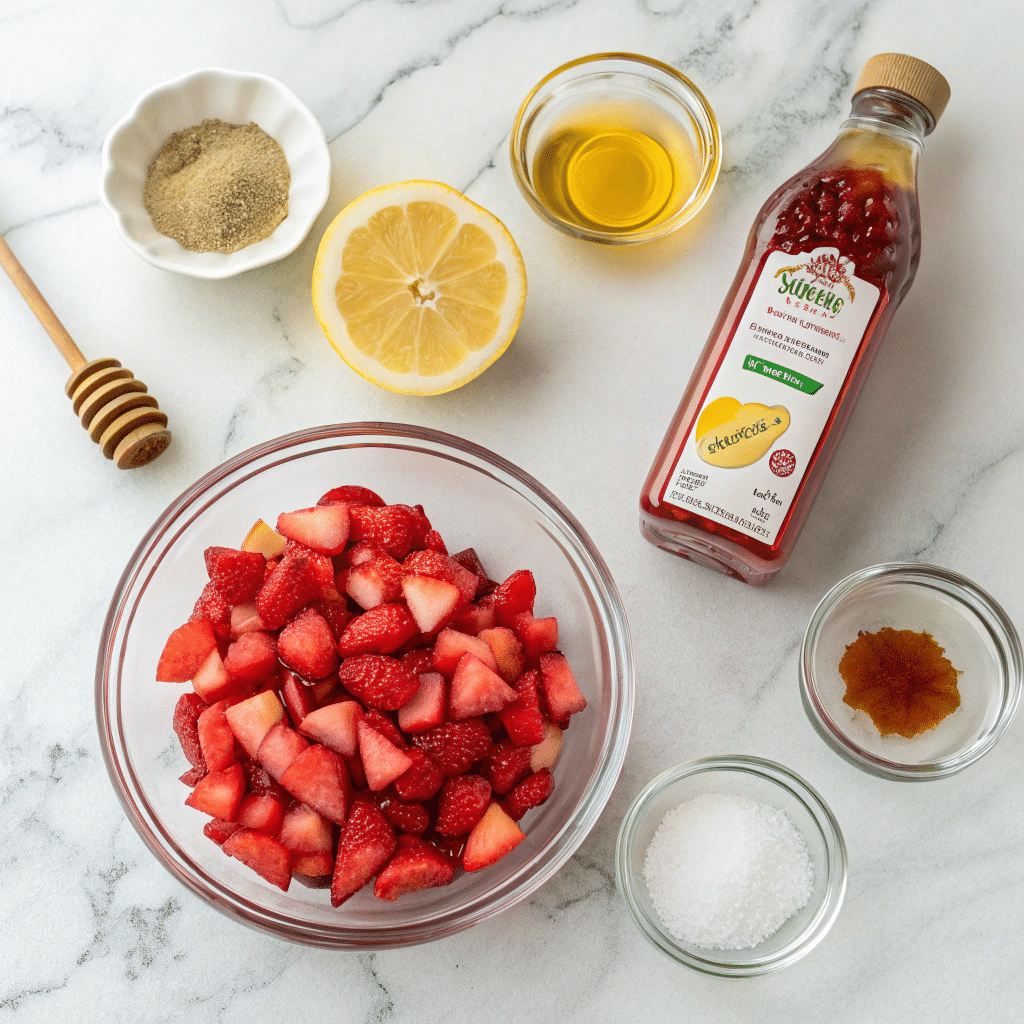
One of the most helpful things about a low sugar jam recipe is how flexible it can be with sweeteners. While traditional jam relies heavily on white sugar, low sugar versions can use a variety of substitutes that still deliver great taste.
Honey is a gentle, floral option that complements fruits like peaches or blueberries. Maple syrup adds a rich, earthy depth, especially to fall fruits like plums or figs. For those watching calories or sugar intake, stevia or monk fruit can be excellent—just be cautious, as they’re much sweeter than sugar.
Another great option is fruit juice concentrate, like apple or white grape juice. These ingredients bring a natural sweetness that complements the fruit without overwhelming its flavor. No-sugar or low-sugar pectin is a must—it lets the jam set properly without needing loads of sugar. Lemon juice plays a key role too, boosting acidity and helping preserve freshness.
The best part? You get to control the sweetness and still end up with a jam that’s thick, bright, and full of fruit-forward flavor. Next, we’ll walk through the full process—from prep to the final seal—so you can make your own batch with confidence.
How to Make a Low Sugar Jam Recipe Step by Step
Set up your tools before starting
Making a low sugar jam recipe is easier when you’re well-prepared. Start by gathering the essentials: a large saucepan, a long-handled spoon, sterilized canning jars with lids, a funnel, and a ladle. Always sterilize your jars ahead of time by simmering them in water or washing them in the dishwasher on the hottest cycle.
Next, wash and prep your fruit. If you’re working with strawberries, be sure to remove the stems and slice them before use. Peaches or plums should be peeled and chopped. Use only ripe fruit—it brings out the natural sweetness that’s so important in a low sugar jam recipe. If your pectin requires calcium water (like some low-sugar varieties), go ahead and mix that too.
Cook the jam with natural ingredients
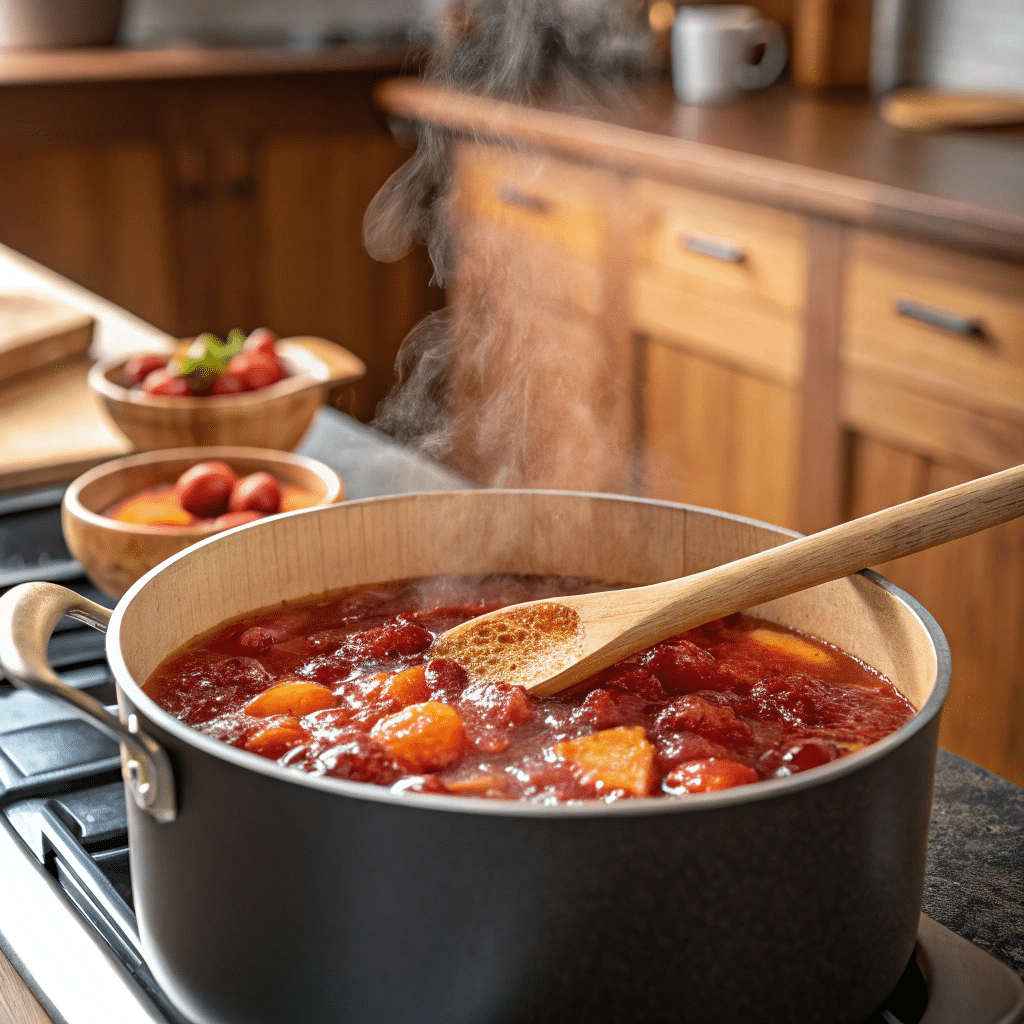
Pour the prepared fruit into your pot and heat gently over medium heat. As it softens, mash it lightly with your spoon. Stir frequently to prevent sticking or scorching. Once the fruit is heated through, add your chosen sweetener—whether that’s honey, maple syrup, or fruit juice concentrate.
Then it’s time for the pectin. Follow the specific directions on the package, since amounts vary between brands. Many low-sugar pectins are designed for flexibility, making it easier to customize your low sugar jam recipe without ruining the set.
Bring the mixture to a rolling boil and let it cook for 10–15 minutes. Test your jam’s consistency by placing a small spoonful on a cold plate. If it wrinkles slightly when touched, it’s ready. If the jam hasn’t set yet, let it cook a few more minutes and check again.
Once your low sugar jam recipe reaches the perfect texture, ladle it into jars, leaving a quarter-inch of space at the top. Wipe the rims clean, seal tightly, and process in a boiling water bath for 10 minutes.
After cooling for 12–24 hours, check the seals. You should hear a soft pop as they seal, locking in the freshness. With proper technique, your low sugar jam recipe will stay shelf-stable for months—ready to brighten up breakfast, desserts, and gifts.
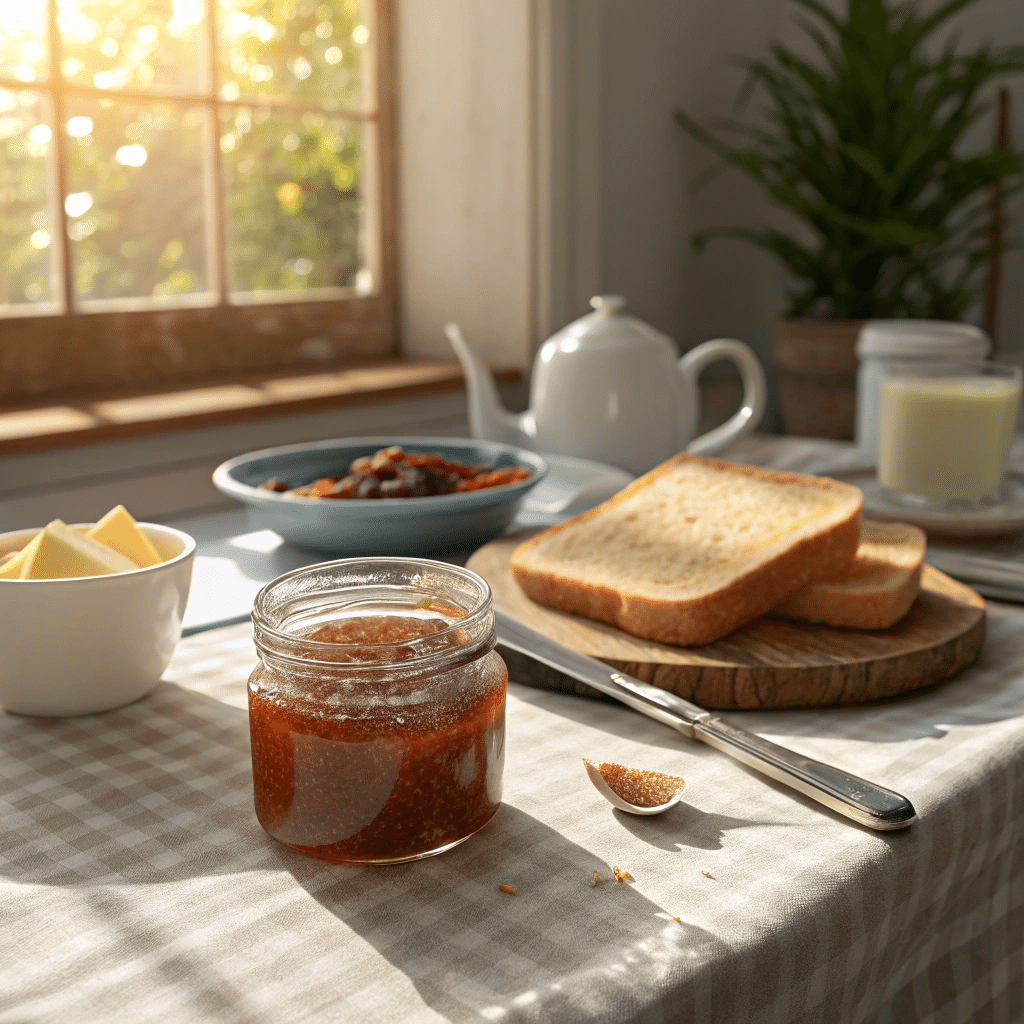
Storing, Customizing, and Enjoying Your Low Sugar Jam Recipe
Storage tips for freshness and safety
Once your jars are sealed and cool, it’s time to store your homemade low sugar jam recipe properly. Keep sealed jars in a cool, dark place like a pantry or cupboard. They’ll stay fresh for up to one year. Always label each jar with the date and fruit type—this makes it easy to rotate your stock and enjoy the oldest batches first.
After opening a jar, store it in the refrigerator and aim to use it within 2 to 3 weeks. Since there’s less sugar to preserve it, low sugar jam can spoil more quickly than traditional versions. If you ever notice mold or an off smell, discard it right away.
If you’re not into water bath canning, you can also refrigerate or freeze your low sugar jam recipe. Just make sure to leave extra space in the jar if freezing, as jam expands. This method is perfect for small batches or quick use.
Flavor ideas and recipe variations
The beauty of a low sugar jam recipe is that it’s easy to customize. You can mix fruits—like strawberry and rhubarb, blueberry and lemon, or peach and ginger—for unique flavors. Fresh herbs like basil or mint can also add unexpected depth to berry-based jams.
Want a thicker texture? Try simmering your fruit a bit longer before adding sweetener and pectin. Prefer a smoother jam? Use an immersion blender before cooking. The flexibility of a low sugar jam recipe means you can adjust it to suit your taste and dietary needs.
If you’re watching your sugar intake or cooking for someone with health concerns, this recipe is a game changer. It’s also a great way to use up seasonal produce before it goes bad. Once you master the basics, your low sugar jam recipe can become a signature gift or a weekend ritual you look forward to.
Now that you know how to make, store, and tweak it—your low sugar jam recipe journey is just getting started.
Conclusion
A great low sugar jam recipe proves that less really can be more. By letting the fruit take center stage, using the right pectin, and exploring natural sweeteners, you’ll end up with a jam that’s not just healthier—it’s also bursting with real flavor. Whether you’re making small batches to store or sharing jars with friends, this simple recipe puts you in control of both taste and nutrition. Once you try it, you may never go back to high-sugar versions again.
For More recipes Follow me in Facebook and Pinterest
Frequently Asked Questions
Can you make jam with less sugar?
Yes, absolutely! A low sugar jam recipe lets you reduce the sugar content without sacrificing taste. By using ripe fruit, low-sugar pectin, and natural sweeteners, you can create a jam that’s both flavorful and healthier than traditional versions.
How to reduce sugar content in jam?
Start by selecting sweet, ripe fruits—this adds natural sweetness. Then, use a no-sugar or low-sugar pectin, which is designed to set without needing tons of sugar. Finally, substitute refined sugar with options like honey, maple syrup, or fruit juice concentrates to balance taste.
What is the minimum amount of sugar in jam?
With a good low sugar jam recipe, you can reduce sugar to as little as one tablespoon per cup of fruit, or even eliminate it entirely if using suitable pectin. The exact amount depends on the fruit and your choice of sweetener or thickener.
What is a good substitute for sugar in jam?
Several substitutes work well, including honey, maple syrup, stevia, monk fruit, and fruit juice concentrates. Each offers a different flavor profile, so it’s worth experimenting to find what you like best in your low sugar jam recipe.